
Beyond Three Chords
Forget the polished, mass-produced art and sanitized history lessons. Punk rock was never just music. It was a total cultural overthrow. Born from a chaotic, anti-establishment ethos and deep disillusionment with society, punk was a raw, immediate, and utterly Do-It-Yourself (DIY) response to the mainstream.
The movement's greatest art form was life itself. It tore down traditional boundaries, allowing people previously shut out of the art world to participate with bold self-expression.
Today, the Punk Rock Museum in Las Vegas is the definitive, hands-on place to experience this crash and the beauty for yourself. We're here to trace the safety pin back to the rebellion, exploring the lasting collision of music, visual art, and fashion that defined a generation.
Book your tickets today and learn about punk rock history in Las Vegas.
The Ripped Canvas:
Punk’s Visual Revolution
When you have no money and no patience for the status quo, you create your own aesthetic. The visual artistry of punk was defined by its DIY spirit and a disdain for polished professionalism.
Poster Power and Zine Dreams
The collage and cut-up techniques of punk art rejected traditional artistic conventions, embracing a jarring, chaotic, and authentic look.
Zine Culture: Zines (short for fanzines) were the original social media of the punk movement. These amateur, primitively or casually produced magazines were central to the movement's DIY ethos. They featured everything from social commentary and punk poetry to band news and were often made with handwritten text, rudimentary typefaces, and photocopied collages. Anyone could make one, and that was the point: "Don't be satisfied with what we write. Go out and start your own fanzine".
Graphic Design: Iconic art, like the Sex Pistols' album covers, often used a ransom-note typography (letters cut out of magazines) to be cheap and fit the crude, DIY look.
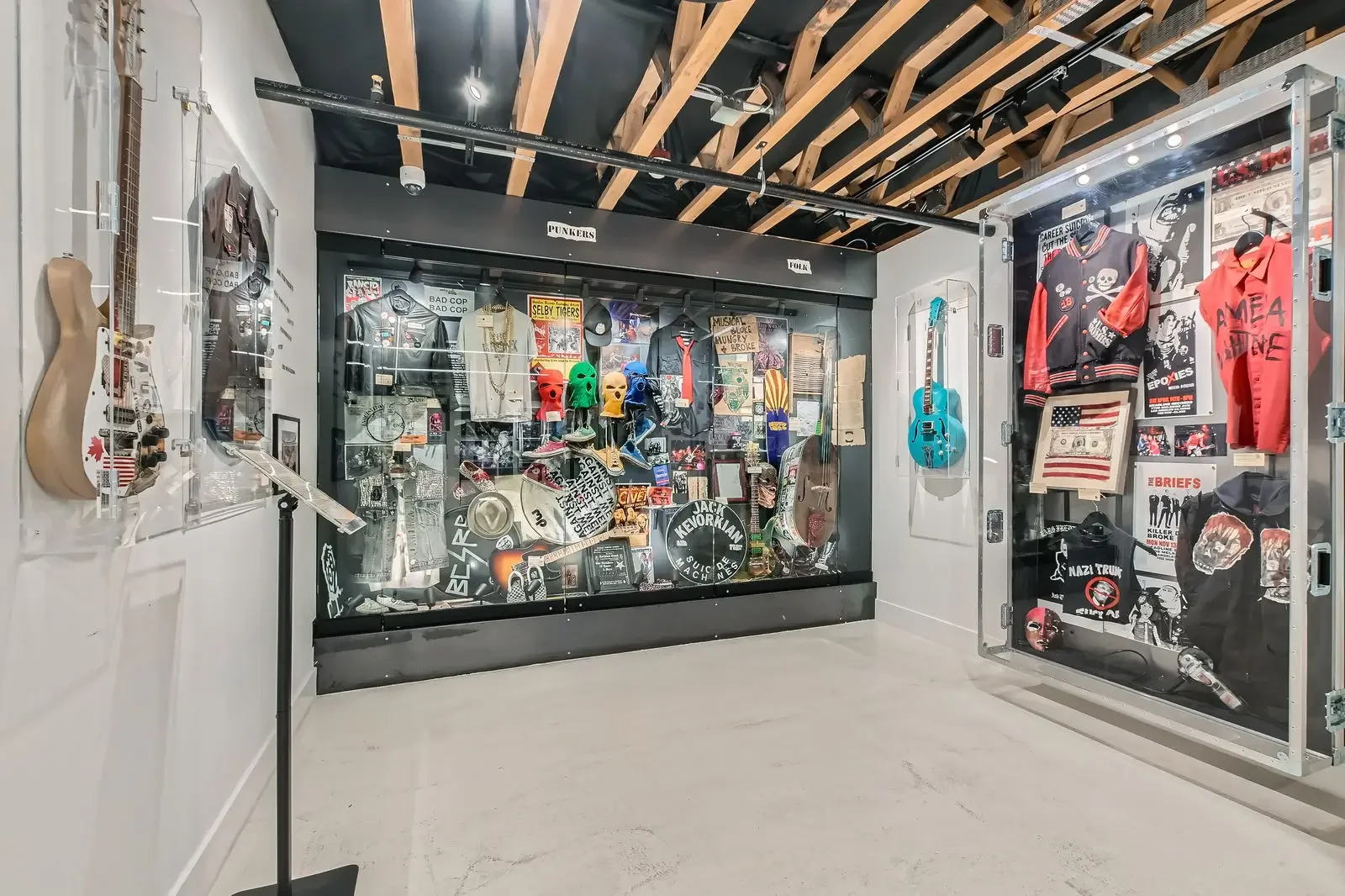
The museum proudly showcases these original zines, flyers, and album artwork, capturing that raw visual energy of the underground press.
Fashion as Warfare
Punk fashion was a form of political protest, making the personal political.
Anti-Fashion: The look stood against consumerism and adherence to polished, mass-produced fashion. Pioneers like Vivienne Westwood and Malcolm McLaren introduced provocative designs, using ripped T-shirts, bondage trousers, and safety pins to symbolize a rejection of propriety.
The DIY Look: A punk is someone who expresses individuality through these choices. People embraced imperfection, using ripped seams, frayed edges, chains, and even black bin liners (garbage bags) to create an unapologetically confrontational style. You didn't need to buy new; you worked with what you had.
Bands Who Looked the Part (And Sounded It)
The aesthetic of the bands was inseparable from the sound of their punk music. Every piece of clothing, every logo, was a declaration of war on the status quo.
The Ramones: The ultimate minimalist statement. Their uniform of leather jackets, skinny jeans, and t-shirts was an accessible, scrappy approach to punk fashion that was a far cry from the glam rock of the era.
The Clash: These guys fused political, anti-authoritarian themes with diverse musical styles and a militant, street-ready visual aesthetic, often using strong graphic design for their albums and posters.
Black Flag: Pioneers of American West Coast hardcore punk. Their visual style, led by the infamous "four bars" logo, was often stark, minimalist, and brutalist, paralleling the intensity and urgency of their faster, raw music. They are renowned for their tireless promotion of an autonomous DIY punk ethic and aesthetic.
The Misfits: Famous for pioneering the horror-punk aesthetic, using dark, shocking imagery that went hand-in-hand with their music.
The Punk Rock Museum: Where the Art Lives On
The Punk Rock Museum is dedicated to showcasing the history, culture, and "absurdity" of the movement. It is not a passive walk-through, but an invitation to engage with punk history literally.
Artifacts of Rebellion: The museum features the world's most extensive and intimate display of punk rock memorabilia, comprising over 1,000 artifacts, many of which were donated by the artists themselves. You can see iconic gear, original album artwork, handwritten lyrics, and clothing that spans the genre from proto-punk to pop-punk.
The Hands-On Experience: What truly sets the museum apart is the interaction. The Jam Room (Guitar Room) allows you to play actual guitars and basses used by bands like Rise Against, NOFX, and Pennywise through their original amps. If you break something? “We fix it, just like we did on tour.”
Beyond the Exhibits: The museum itself is a cultural hub. You can catch an impromptu performance in the Pennywise Garage, grab a drink at the Three Star Punk Bar, or even get a permanent souvenir at the full-service tattoo parlor.
The Permanent Echo of Anarchy
Punk rock's legacy is its profound influence on music, design, and culture. It proved that art doesn't need a gallery; it just needs a voice, a Xerox machine, and a commitment to authenticity. The movement broke the rules of what was considered "art" and defined a visual language that remains vital today.
Come Live the Punk Life.
Get in the Pit.
Experience the culture, the history, and the sound that changed the world.
Frequently Asked Questions
Q: Do I need to be a huge punk fan to visit?
A: Absolutely not! The museum invites lifelong fans and curious individuals (or "looky-loos") of all ages to experience the culture and history firsthand.
Q: Can I really play the instruments in the Jam Room?
A: Yes. The Jam Room is a unique feature that allows visitors to play actual guitars and basses used by bands such as NOFX, Rise Against, and Pennywise through original amps.
Q: What other unique features does the museum have?
A: Beyond the 1,000+ artifacts, the museum houses the Three Star Punk Bar, a tattoo parlor (The Shop), and a punk-themed wedding chapel. You can also book guest tour guides led by punk rock musicians.
